Invasive Species
INVASIVE SPECIES AND THEIR IMPACT UPON AQUATIC HABITATS
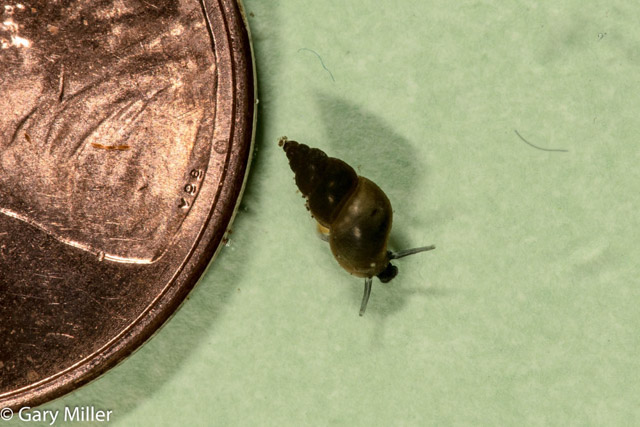
Invasive Species the New Zealand Mud Snail
There are numerous threats to our aquatic ecosystems that will have lasting impacts upon our Great Lakes fisheries. Water pollution/sedimentation, habitat loss/degradation, connectivity, and the list of examples goes on and on. Invasive Species introductions is a topic that usually doesn’t get immediate attention until it’s too late. The intentional or accidental introduction of Invasive Species can have irreversible consequences upon our ecosystems. These invaders are often responsible for lost species diversity and altering food web dynamics within new habitats.
If left unchecked, the consequences are often disastrous to ecosystem functionality. The ensuing affects often result in dire consequences that can’t be fully understood until its too late. This demonstrates the importance of early detection and forward thinking approaches to minimize future introductions and spread. Most Invasive Species tend to be undetectable in low population densities, by the time the are discovered its usually too late.
Human Travel
In today’s world, people have the ability to travel to just about every corner of the globe. Sometimes a hitchhiker can find its way into new habitats. Albeit most of these introductions have been unintentional into our aquatic communities. However, there are some serious repercussions associated with these introductions. The aquatic invaders usually remain unchecked by natural control mechanisms and proliferate quickly as a result. The lack of natural predators usually favors the Invasive Species with a competitive advantage over time.
Predicting the outcomes of Invasive Species introductions is very difficult. In most cases there are cascading effects that ripple through affected ecosystems. As invasive populations grow, ecosystem sustainability is often lost or greatly impaired leading to reduced Native Species diversity. For the Great Lakes region this will ultimately result in reduced numbers of highly desirable game species.
Great Lakes
The Great Lakes region has a growing number of Invasive Species concerns. Some notable examples would be the Sea Lamprey, Alewife, Spiny Water Flea, Zebra Mussels, Quaga Mussels, New Zealand Mud Snail, and now Didymo. All of these examples have consequences that go well beyond the physical parameters of water quality. The end result could have severe impacts upon the Trophic structure of our aquatic communities.
The Sea Lamprey almost wiped out the Lake Trout Populations thru uncontrolled predation. Alewife and Spiny Water Fleas had direct and indirect impacts upon Native Zooplankton populations and Juvenile Fish Survival. Zebra and Quaga mussels have changed the Trophic cascades in the Great Lakes from the bottom up through decreased nutrient loads, clear/warming waters, increased Algal blooms, and reduced Salmonid populations. Simply put these ripple effects have directly impacted the Economical value of our Recreational Sport Fishery.
New Zealand Mud Snail
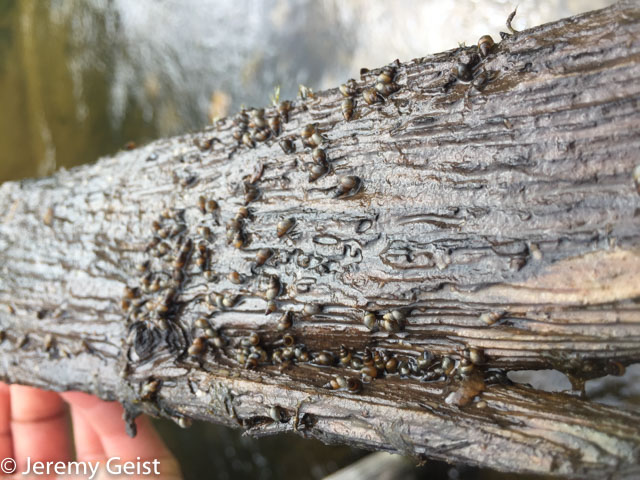
One of the newest Invasive Species that is currently spreading throughout the Great Lakes Region is the New Zealand Mud Snail. The effects of this new invader are not yet fully understood. Researchers believe this invader will have adverse effects upon native snail species diversity by outcompeting native snails for food and space. Concerns have also been raised regarding how the New Zealand Mud Snail may effect primary production stream ecosystems. This will more than likely have dire consequences for macro-invertebrate communities and ultimately stream fish populations. In a trout stream this could be detrimental. As aquatic insect populations decrease, so will trout abundance in the affected streams. The New Zealand Mud Snail can clone itself! It only takes one female hitchhiker to start a colony. They are usually transported between aquatic habitats via anglers, recreational boaters, and other water-based recreational activities.
Didymo or Rock Snot
During the Fall of 2021, Didymo (or Rock Snot) is an Invasive Algae discovered blooming in the Upper Manistee River near Kalkaska, MI. According to an MDNR press release,
this is the first known Didymo case in the Lower Peninsula. The last Didymo bloom was documented in the St. Marys River near Sault St. Marie, MI in 2015. Experts were shocked by the discovery as it indicates the spread may be greater than originally thought. According to researchers, Didymo blooms form in low-nutrient cold-water streams. Trout streams to be exact!
Similarly to the New Zealand Mud Snail, Didymo blooms can cover expansive stream-bed areas. The blooms essentially suffocate macro-invertebrate habitat. Long term impacts could lead to reduced aquatic invertebrate abundance, ultimately impacting trout populations over time. Currently there are NO KNOWN MANAGEMENT solutions to eradicate Didymo so prevention is the only mitigation strategy available. Like the New Zealand Mud Snail, Didymo is commonly spread by anglers, recreational boaters, and other water-based recreational activities.
What to do
I encourage everyone to take extra precautions throughout the upcoming season. Throughly sanitize, wash, and dry your fishing gear and equipment after each use. This will be very important to help prevent further spread, especially if you plan on fishing multiple watersheds over several days. I would also encourage boat owners to invest in a separate anchor and rope for each river you fish. YOU CANNOT EFFECTIVELY CLEAN AN ANCHOR ROPE! Whenever possible, you should avoid using anchors with complex surfaces such as stacked plates. These anchors are more likely to spread aquatic hitchhikers and require disassembly to properly clean. A simple pyramid anchor is easier to clean without having to take it apart.
No matter what your preferred anchor choice is, I would encourage everyone to have one Anchor and one Rope designated to each watershed you fish. The same would apply to the wade angler, a separate pair of boots or waders per stream would be the preferred option. If you would like more information regarding Didymo, New Zealand Mud Snail, check out NZMS Collaborative. Join the fight, end the spread, and get informed.
Tight Lines,
Ed