April Volley Anchored Podcast – Kevin Feenstra

anchored podcast

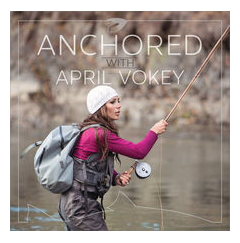
Make sure to check out Kevin Feenstra on April Vokey’s Podcast – Anchored.  Kevin Feenstra who is a great friend, an incredible guide on the Muskegon River, and a Mangled Fly Contributor.  Was Interview by April Vokey at his home in November.  April and Kevin discuss Midwest Steelhead, you will enjoy this episode click this link to go to iTunes – or go to April Website and find the episode as well.

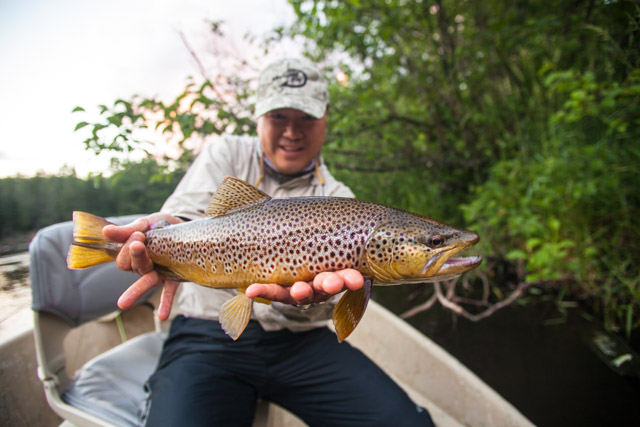
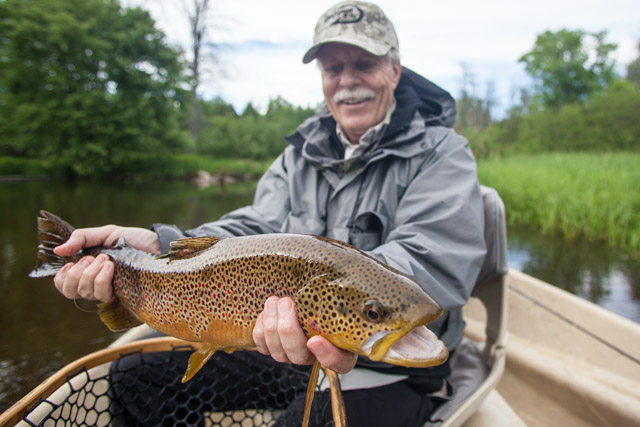
Digital Camo Hat helping find 20″ trout

So those that fish with me know that I have a few superstition’s.  1 – NO BANANA’S 2- No white lighters .  Bring either of these items in the boat and you will get some sort of negative reaction.  #grumpyguide.

Also my wife has been known to laugh at me, as I tend to wear certain clothing items when I’m guiding and not others. Based on past success when wearing these certain clothing items.  With that I have lucky hats that I will continue to wear when fishing is good.  And No Way do we wash these hats, can’t clean out the good luck!  No matter how bad they start to stink! With that, one thing I’ve noticed this year, is that clients wearing the Digital Camo Cap in my boat this month have scored some nice trout.

So can it be true that the Digital Camo Cap can help you score a trout over 20″?  Proof might be in the pudding.  I know if I didn’t have one yet, I would get one before they are gone.Digital Camo Hat

Digital Camo Hat Digital Camo Hat

Bass Popper

Bass Popper

Bass Popper Pattern

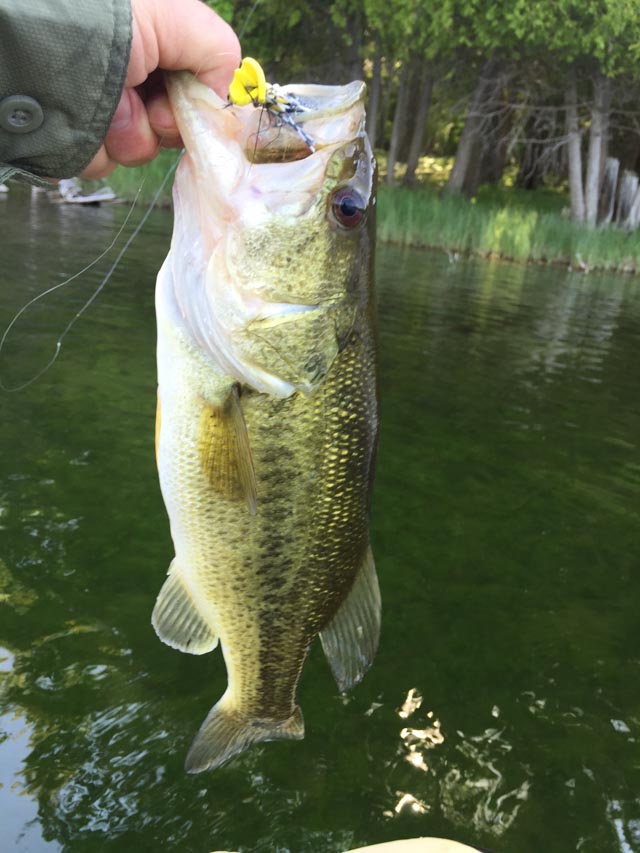
Woke up this morning to a very nice text message from Bob C.  Bob was fishing Bass Poppers last night, and he wanted to share his success on the Mrs. Pakman popper pattern.   Fishing Bass on topwater, no matter if they are smallmouth or largemouth bass, is personally on of my favorite experiences with a fly rod.  The explosive takes and visual experience, that you get when a Bass takes your popper is something every fly angler needs to witness.  It truly doesn’t get any better, than Bass on topwater.

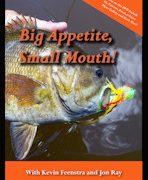
The Mrs. Pakman was a pattern that we covered in the Big Appetite Smallmouth Bass  DVD  from a couple years ago.  Kevin Feenstra and I collaborated on this Smallmouth Video, to cover all aspects of smallmouth bass fishing.  One of  the 6 patterns we covered was this simple foam based popper, it is easy to tie and highly effective.  Check it out, if you haven’t.  The Pattern is covered int he 32 nd minute of the video.  Also you can watch the video On Demand here.  Thank you for your support.

If your not into tying your own top water patterns.  But your thinking of buying a few for this summer’s Bass fishing adventure.  Two things to consider when buying a popper.  First, what is the underbody color.  The most important color is what does the bass see.  Don’t worry about the colors on top of the popper.  Some great choices to start with are yellow, white, and then go dark for an assortment like dark green or black.  Second, is the hook gap on a popper.  Make sure if your buying a Bass Popper that you buy one with a big hook gap.  No less than the width of your thumb.  Make sure the Bass Popper can hook the Bass that your targeting.

Some of the best  Bass Poppers to buy are the Boogle Bug Popper , make sure to check these Poppers out for your Bass fishing needs.  They are a little expensive for a fly, but they are truly worth it.  Very durable, come in great colors, and are perfect size for smallmouth and largemouth bass.

Happy Bass Fishing,

Jon Ray

Turtle and Eagle Food

Just a few miles from my house in Northern Michigan their is an eagle cam.  I had never thought of turtle being a food source for Eagles.  But when you have the pressure of feeding 2 kids, I guess you feed them what you can find.  Turtle ends up escaping the nest, but had to be a long ways to find ground.


http://www.carbontv.com/cams/carbontv-eagle-cam/turtle-escapes-from-the-eagles-nest


Fish or Die Trailer

Not sure I’m man enough for the skin eating parasite .  But some amazing footage.


Respect for Migratory Fish

Fighting the Current

Each spring, the river floods, and at some point I have a few days off.   It is not that steelhead can’t be caught on those days.     Fly fishing, however, requires that the fish see the fly and if I don’t feel that this minimum requirement can be met, cancellations are the likely  result.     Steelhead are of course a great gamefish.   They are my favorite fish.     I also have a tremendous respect for steelhead and other salmonids as they migrate.     They really do amazing things as they traverse rivers big and small.     When I had some cancellations last week, I visited several small streams and witnessed these marvels of nature working their way up river.

Steelhead take advantage of small creeks when they are flooded.      As soon as this tiny, tiny creek became high enough for travel, up came the fish in droves.

In any creek, steelhead take advantage of breaks in the current.    In fishing terms, these are snags.   Steelhead love structure just like any other fish.     They need the structure for protection in small places but they also need the break in current that these provide.

In this stream,  a series of tiny water falls existed.    I did not see the steelhead leaping over them, but they had definitely been clearing them, most likely at night.

The fact that there was little water in the stream was not an issue to these fish at all.   I saw some fish temporarily stranded as they worked their way through the shallows.

Steelhead are a precious commodity, this year more than ever.   The Great Lakes fisheries are in a period of change, with the decline in baitfish populations and the subsequent increased pressure on other species, such as steelhead.    Now more than ever, they need a little respect.     This means protecting the fish while they are in the rivers, and protecting them on the small scale even as we fish and handle them.    They deserve it!

Kevin Feenstra


Great Lakes Muskie Survey / Education

Jim Dexter from the DNR explains a little of the life cycle and the exciting new strain of GLM in thornapple lake in Midwest Michigan.

My Favorite Colors from January-May

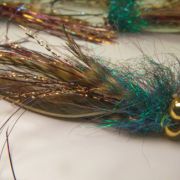
I have no affiliation with the people who make a certain product, but I have to say that some of their stuff is  brilliant.    The product that I am speaking of is ice dub, and between ice dub and the various colors of flashabou, I could guide every day with little else than thread and hook (though I do like some feathers and fur too:)).        During the months of January-March, I rely very heavily on one color family of ice dub.    The colors are olive, peacock-eye, peacock, and black peacock.     These colors seem to imitate the same things to the fish.     It could be that the sheen on this color scheme is just plain appealing to fish (it is an attractor color).   On the other hand, it could be that many of the bait fish in the river take on a peacockish tint during the winter months.

When I started looking underwater in the winter, I was surprised at just how many creatures had a bluish/green tint in the winter months.    The darter above is just one example of this color scheme in nature during the winter and spring.    Crayfish, scuds, gobies, and other fish also have this peacock overtone to their colors.

Whether it is just naturally attractive, or whether it is due to the colors occurring in nature, or some combination of the two, I am not entirely certain.    At the end of the day, these colors of ice dub just work great for catching predator fish.

Through the first half of the year, flies with this color scheme can be fished in several different ways.    They can be swung on sink tips through flat runs during the winter months for steelhead.      Another option is to fish the soft edges of the stream for resident trout with smaller olive or peacock based flies.     I really enjoy swinging wet flies for trout and this is a great extension of wet fly fishing through the winter months.   Yet another option is to tie weighted sculpins and fish them below an indicator for trout.    Often times a nymph pattern is fished on a dropper between the indicator and the weighted sculpin.

This post mentions the months of January through May.  However, as a guide, these colors are in my box year around, no matter what species I am guiding for.     Give this color family a shot on your local stream.    I am pretty sure that it will work!

Thanks for reading this!

Kevin Feenstra